
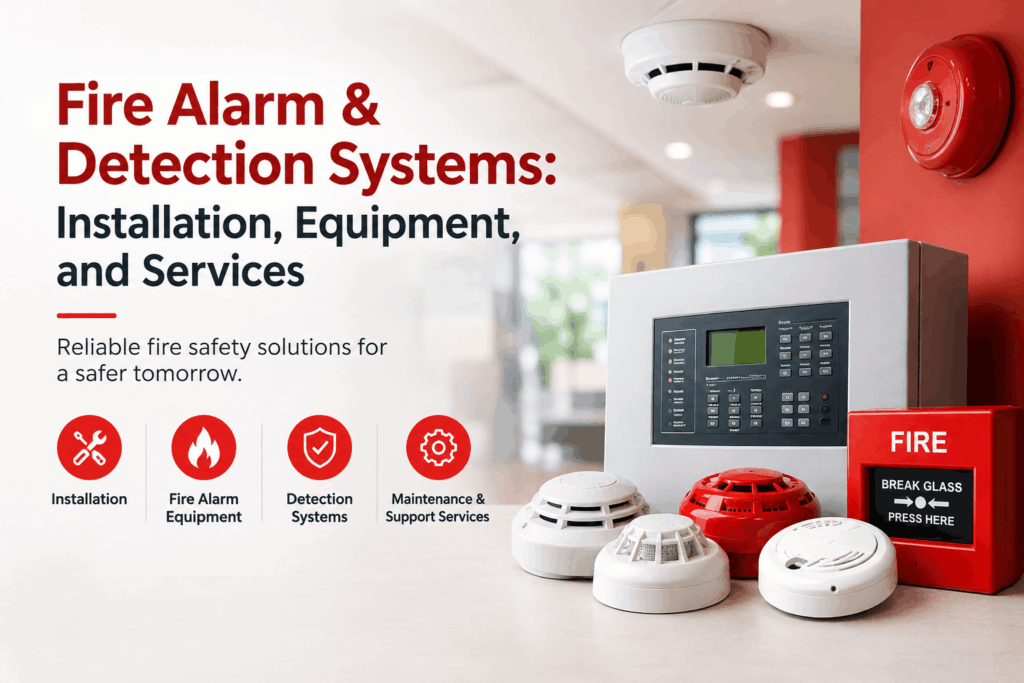
Fire Alarm & Detection Systems
Fire safety starts with early detection. A reliable fire alarm and detection system can identify smoke, heat, or fire at an early stage and provide an immediate warning, helping occupants respond quickly and reducing the risk of serious property damage.
Businesses, residential buildings, warehouses, commercial facilities, and industrial properties require properly designed fire detection and alarm solutions based on the building layout, occupancy, and fire safety requirements.
What Is a Fire Alarm & Detection System?
A fire alarm and detection system is designed to detect signs of fire and alert people inside a building. Depending on the system, it may use smoke detectors, heat detectors, manual call points, alarm sounders, control panels, and other components.
Fire Detection Company for Complete Fire Safety Solutions
Choosing an experienced fire detection company is important when installing or upgrading a fire alarm system. Professionals can assess the building, identify suitable detection points, select compatible equipment, and design a system according to the property’s requirements.
A professional service may cover system design, equipment supply, installation, testing, commissioning, and maintenance.
Fire Alarm System Companies and Their Services
Professional fire alarm system companies provide solutions for different types of properties. Their services can include:
- Fire alarm system design
- Detector installation
- Fire alarm panel installation
- Manual call point installation
- Alarm sounder installation
- System testing and commissioning
The correct system depends on factors such as building size, occupancy, environmental conditions, and the level of fire protection required.
Fire Alarm Equipment Suppliers
A reliable fire alarm equipment supplier can provide the components required for a complete detection system. Common equipment includes:
- Smoke detectors
- Heat detectors
- Fire alarm control panels
- Manual call points
- Sounders and strobes
- Modules
- Emergency batteries
- Monitoring components
Using compatible and properly certified equipment is essential for reliable system performance.
Fire Detection System Installation
Fire detection system installation should be planned according to the building’s structure and potential fire risks. Detector locations, alarm devices, control panels, and wiring need to be properly positioned to provide effective coverage.
Professional installation also helps ensure that the system is correctly configured and tested before being placed into operation.
Fire Alarm System Installation
A professional fire alarm system installation normally involves several stages:
- Site assessment
- Fire risk and coverage evaluation
- System design
- Equipment selection
- Installation and wiring
- Control panel configuration
- Testing and commissioning
- Handover and maintenance planning
Proper installation is important because even high-quality equipment may not perform effectively if it is incorrectly positioned or configured.
Fire Alarm Panel Companies
The fire alarm control panel is an important part of a fire detection system. It receives signals from connected detection devices and activates the appropriate alarm or notification functions.
Automatic Fire Alarm System
An automatic fire alarm system continuously monitors designated areas for indications of fire. When a detector identifies smoke or excessive heat, the system can send a signal to the control panel and activate connected alarm devices.
Automatic detection can be particularly useful in commercial buildings, offices, warehouses, hotels, industrial facilities, and other occupied spaces where early warning is important.
Fire Alarm System Service and Maintenance
Regular fire alarm system service helps identify faults before they affect system performance. Maintenance may include:
- Detector inspection
- Alarm testing
- Control panel checks
- Battery inspection
- Wiring checks
- Fault monitoring
The maintenance frequency should follow the applicable fire safety requirements and the manufacturer’s recommendations.
Fire Detection System Supplier
When selecting a fire detection system supplier, consider more than equipment availability. A complete supplier should be able to support system design, installation, testing, commissioning, and ongoing service where required.
It is also important to verify that the supplied equipment is appropriate for the intended application and complies with applicable local requirements.
Fire Monitoring System
A fire monitoring system can provide centralized visibility of fire alarm conditions and system status. Depending on the installation, monitoring can help responsible personnel identify alarms, faults, or other system events and respond appropriately.
For larger facilities, integrating monitoring with a broader fire safety strategy can help improve response and system management.
Choosing the Right Fire Alarm Company
When looking for a fire alarm company, evaluate the company’s experience, technical capabilities, equipment range, installation services, maintenance support, and knowledge of applicable fire safety requirements.
For a new installation or an existing system upgrade, a professional site assessment can help determine the most suitable solution for the building.
Conclusion
A properly designed fire alarm and detection system provides an important layer of protection for people and property. From fire detection and alarm panels to automatic detection, monitoring, installation, and maintenance, every part of the system contributes to reliable fire safety.