
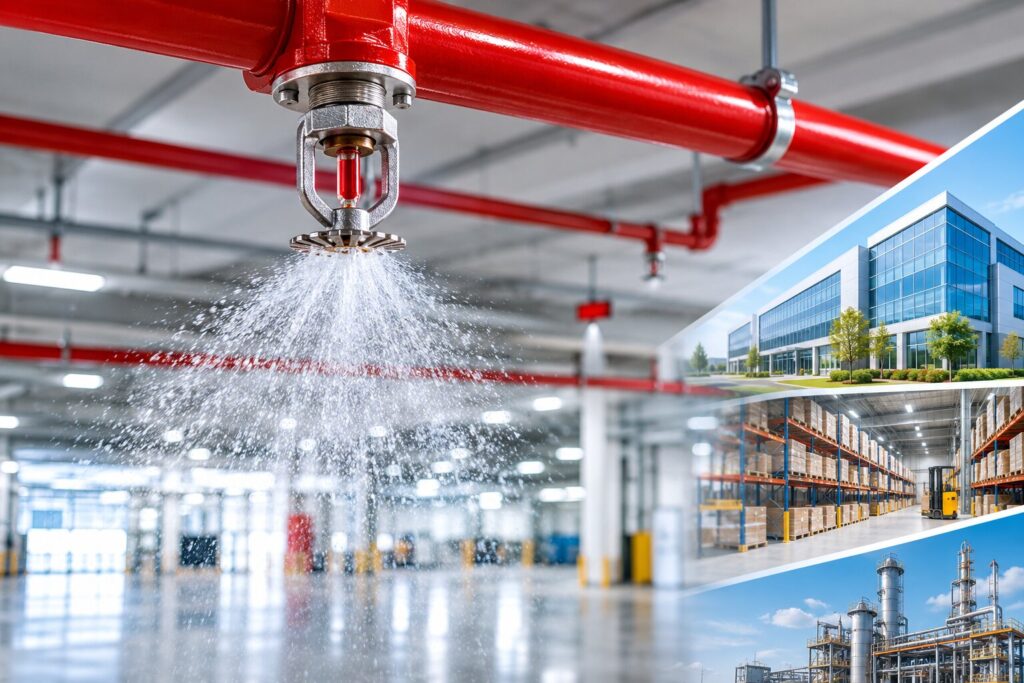
Fire safety is important for every commercial and industrial building, including offices, warehouses, factories, shopping areas, and large facilities. Fire Safety Systems combine different solutions to help protect people, property, and equipment from fire risks. Proper Fire Safety And Prevention planning can reduce risks and improve the overall safety of a building.
A sprinkler system provides an automatic way to control a fire when it starts. Along with a suitable Fire System Installation, alarms, extinguishers, and other protection equipment, sprinklers form an important part of a complete fire safety strategy.
What Is a Fire Sprinkler System?
A fire sprinkler system is a fire protection system that uses water to control or suppress a fire. It includes sprinkler heads, pipes, valves, and a reliable water supply. Professional Fire Protection Services can help assess a building and recommend suitable protection solutions.
When heat from a fire reaches a sprinkler head, it activates and releases water over the affected area. This quick response can help control the fire before it spreads to other parts of the building.
Why Are Fire Protection Sprinkler Systems Important?
Fire Protection Sprinkler Systems provide an important layer of protection for commercial and industrial properties. They can help control a developing fire, reduce potential damage, and limit the spread of flames.
A complete fire protection strategy may also include Fire Prevention And Protection measures such as fire alarms, emergency procedures, extinguishers, and regular inspections.
- Control fires at an early stage
- Reduce potential property damage
- Protect equipment and valuable assets
- Reduce the spread of flames
- Support emergency response
- Improve overall building safety
Types of Fire Sprinkler Systems
Different buildings require different sprinkler solutions. Common systems include wet pipe, dry pipe, pre-action, and deluge systems.
Wet Pipe Systems
A wet pipe system keeps water inside the pipes and is commonly used in areas where freezing conditions are not normally a concern.
Dry Pipe Systems
A dry pipe system uses pressurized air and can be suitable for areas where freezing conditions may occur. Water enters the piping when the system is activated.
Pre-Action Systems
A pre-action system uses additional detection and activation arrangements before water is introduced into the sprinkler piping. It can be considered for areas requiring additional control.
Deluge Systems
A deluge system uses open sprinkler outlets and can release water across a protected area when the system is activated. It is generally used for specific high-hazard applications.
Sprinkler System for Fire Fighting
A Sprinkler System For Fire Fighting is connected to a suitable water supply through a network of pipes. Sprinkler heads are positioned throughout the protected area based on the system design.
When sufficient heat reaches a sprinkler head, it activates and releases water toward the affected area. Proper system planning is important to ensure suitable coverage and water delivery.
A Sprinkler Fire Fighting System can be part of a wider fire protection setup that includes alarms, extinguishers, pumps, tanks, and other firefighting equipment.
Commercial Sprinkler System Installation
Commercial Sprinkler System Installation requires careful planning because commercial buildings can contain offices, storage areas, kitchens, electrical equipment, and other spaces with different fire risks.
Before installation, professionals consider the building layout, ceiling height, occupancy, fire hazards, water supply, and required sprinkler coverage. Correct pipe sizing and sprinkler placement are also important for reliable performance.
Fire Sprinkler System Installation
Proper Fire Sprinkler System Installation involves more than simply placing sprinkler heads around a building. The system should be designed according to the property’s specific requirements.
Professional Fire Fighting System Design considers factors such as water demand, pipe layout, sprinkler spacing, building use, and potential fire hazards.
Depending on the property, Fire Fighting Equipment Suppliers may also provide equipment required for a complete fire protection arrangement.
Fire Protection Equipment and Other Systems
Sprinklers are only one part of a complete fire safety plan. Buildings may also require alarms, detection equipment, extinguishers, pumps, and other protection systems.
A qualified Fire Protection Equipment Supplier can help businesses identify suitable equipment based on their building and fire protection requirements.
Fire alarms are also important for early warning. Businesses may work with Best Fire Alarm Companies and Fire Alarm Panel Companies for suitable alarm and control solutions.
Fire Detection Equipment can provide early warning and support a building’s overall emergency response.
Fire Suppression and Special Applications
Some facilities require more specialized fire protection depending on their operations and hazards. Fire Suppression System Design should consider the type of fire risk, protected area, equipment, and required suppression method.
For certain industrial applications, a Foam Fire Suppression System may be appropriate where flammable liquid fire hazards are present.
Specialized facilities may also require Marine Fire Fighting Equipment or a Water Fire Fighting System based on their operational requirements.
Fire Extinguishers and Maintenance
Fire extinguishers provide another important layer of protection. A Fire Stop Portable Extinguisher can be used for suitable types of small fires when people are trained and it is safe to do so.
Regular inspection and maintenance are essential for sprinkler systems and other fire protection equipment. Sprinkler heads, pipes, valves, pumps, water supplies, alarms, and extinguishers should be checked according to applicable requirements.
Choosing the Right Fire Sprinkler System
Before installing a sprinkler system, building owners should consider:
- Type and size of the building
- Occupancy and fire hazards
- Building layout
- Available water supply
- Required sprinkler system
- Applicable safety requirements
- Installation requirements
- Inspection and maintenance needs
Professional assessment and proper Fire System Installation can help ensure that the selected system is suitable for the property’s needs.
Conclusion
A properly designed and maintained sprinkler system is an important part of fire safety for commercial and industrial buildings. Fire Protection Sprinkler Systems can help control fires and reduce potential damage when they are correctly designed, installed, tested, and maintained.
From Sprinkler System For Fire Fighting to Commercial Sprinkler System Installation, the right solution depends on the building’s size, occupancy, fire risks, and protection requirements. A complete approach combining sprinklers, alarms, detection equipment, extinguishers, and regular maintenance can provide stronger overall fire protection.